THREE: From this necessity of the favour of other people arose private duels, which sprang up precisely in an anarchical state of the laws. It is said they were unknown to antiquity, perhaps because the ancients did not meet suspiciously armed in the temples, the theatres, or with friends; perhaps because the duel was an ordinary and common sight, presented to the people by gladiators, who were slaves or low people, and freemen disdained to be thought and called private gladiators. In vain has it been sought to extirpate the custom by edicts of death against any man accepting a challenge, for it is founded on that which some men fear more than death; since without the favour of his fellows the man of honour foresees himself exposed either to become a merely solitary being, a condition insufferable to a sociable man, or to become the butt of insults and disgrace which, from their constant operation, prevail over the fear of punishment. Why is it that the lower orders do not for the most part fight duels like the great? Not only because they are disarmed, but because the need of the favour of others is less general among the people[213] than among those who, in higher ranks, regard themselves with greater suspicion and jealousy.
FORE:Some persons have maintained that a crime, that is, an action contrary to the laws, is punishable wherever committed, as if the character of subject[193] were indelible, or, in other words, synonymous with, nay, worse than, the character of slave; as if a man could be the subject of one kingdom and the resident of another, or as if his actions could without contradiction be subordinate to two sovereign powers and to two legal systems often contradictory. So some think that a cruel action done, say, at Constantinople is punishable at Paris, for the abstract reason that he who offends humanity deserves to have collective humanity for his enemy, and merits universal execration; as if judges were the avengers of human sensibility in general, and not rather of the covenants that bind men together. The place of punishment is the place of the crime, because there, and there only, is it a compulsory duty to injure an individual, to prevent an injury to the public. A villain, but one who has not broken the covenants of the society of which he was not a member, may be an object of fear, and for that reason be expelled and exiled by the superior power of that society; but he cannot be legally and formally punished, since it is for the laws to avenge, not the intrinsic malice of particular actions, but the violation of compacts.
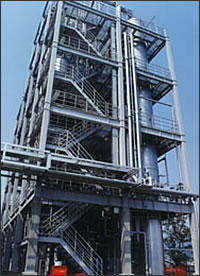
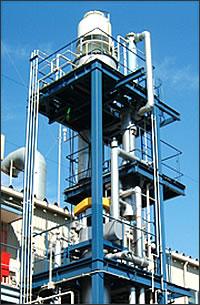
Methanol refinement systems, amyl alcohol refinement systems, ethanol refinement systems, hexanol distillation systems, propanol refinement systems, cyclohexanol distillation systems, isopropanol dehydration systems, ethylene glycol recovery systems, and butanol distillation systems.
FORE:Analogy between crime and punishment is another idea which, except in the case of death for death, has been relegated from the practice of most criminal laws. Yet the principle has in its favour the authority of Moses, the authority of the whole world and of all time, that punishment should, if possible, resemble the crime it punishes in kind; so that a man who blinds another should be blinded himself, he who disfigures another be disfigured himself. Thus in the old-world mythology, Theseus and Hercules inflict on the evil powers they conquer the same cruelties their victims were famous for; Termenus having his skull broken because with his own skull he broke the heads of others; and Busiris, who sacrificed others, being himself sacrificed in his turn. Both Montesquieu and Beccaria also advocate analogy in punishment, and so does Bentham to some degree; there being, indeed, few greater contrasts between the theories of the great English jurist and modern English practice than that the former should not have deprecated some suffering by burning as a penalty analogous to the crime of arson, and that he should have advised the transfixing of a forger¡¯s hand or of a calumniator¡¯s tongue[79] by an iron instrument before the public gaze as good and efficient punishments for forgery and slander.[113]
Hexane distillation systems, tall oil distillation systems, benzene distillation systems, lubricating oil refinement systems, xylene-free distillation systems, low-boiling gas distillation systems, ethylbenzene recovery systems, fusel oil distillation systems, naphthalene distillation systems, propylene recovery systems, and turpentine oil distillation systems.
FORE:CHAPTER VIII. WITNESSES.
Ether distillation systems, camphor distillation systems, epichlorohydrin distillation systems, aniline distillation systems, dioxane refinement systems, acetonitrile distillation systems, furfural refinement systems, formalin distillation systems, cyclohexane distillation systems, monoethanolamine rectification systems, polyglycol ether distillation systems, dimethylformamide recovery systems, acrylic glycol ether distillation systems, acrylonitrile refinement systems, acetone recovery systems, pyridine distillation systems, methyl ethyl ketone recovery systems, picoline distillation systems, methyl isobutyl ketone recovery systems, and acetaldehyde recovery systems.